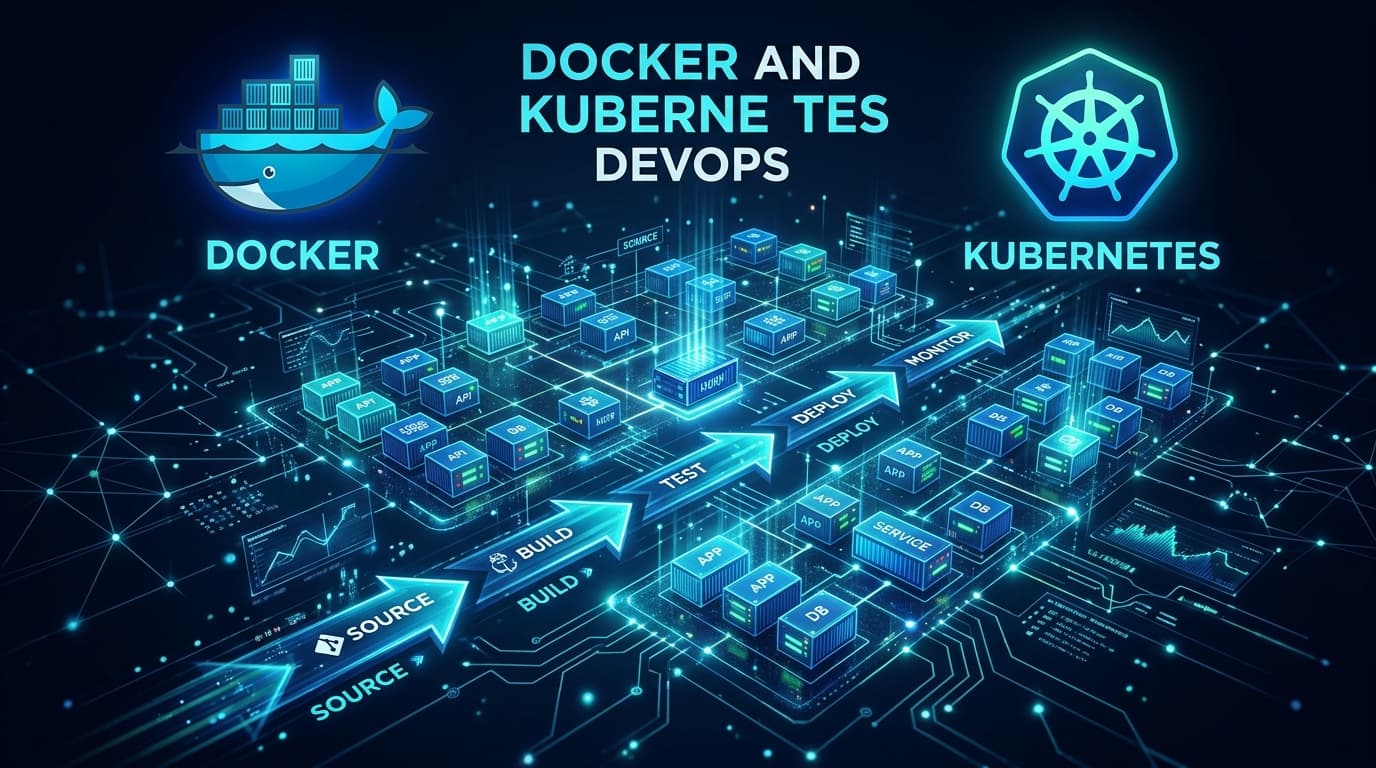
Why CI/CD Is Non-Negotiable
Every manual deployment step is a risk:
- Forgetting to run tests
- Deploying to the wrong environment
- Missing a database migration
- Skipping security scans
A CI/CD pipeline automates all of this. Once configured, it's the floor of your quality standards — every change goes through the same gauntlet before touching production.
GitHub Actions Fundamentals
# .github/workflows/ci.yml
name: CI Pipeline

on:
  push:
    branches: [main, develop]
  pull_request:
    branches: [main]

# Cancel in-progress runs when new commits are pushed
concurrency:
  group: ${{ github.workflow }}-${{ github.ref }}
  cancel-in-progress: true

jobs:
  # ... jobs defined here
Complete Production Pipeline
name: Production CI/CD

on:
  push:
    branches: [main]
  pull_request:
    branches: [main]

env:
  NODE_VERSION: "20"
  REGISTRY: ghcr.io
  IMAGE_NAME: ${{ github.repository }}

jobs:
  # ─── Job 1: Type Check & Lint ───────────────────────────────────────────
  quality:
    name: Type Check & Lint
    runs-on: ubuntu-latest
    steps:
      - uses: actions/checkout@v4

      - name: Setup Node.js
        uses: actions/setup-node@v4
        with:
          node-version: ${{ env.NODE_VERSION }}
          cache: "pnpm"

      - name: Install pnpm
        uses: pnpm/action-setup@v3
        with:
          version: 9

      - name: Install dependencies
        run: pnpm install --frozen-lockfile

      - name: Type check
        run: pnpm tsc --noEmit

      - name: Lint
        run: pnpm eslint . --max-warnings=0

  # ─── Job 2: Tests (parallel matrix) ─────────────────────────────────────
  test:
    name: Tests (${{ matrix.shard }}/3)
    runs-on: ubuntu-latest
    needs: quality  # Only run after quality passes
    strategy:
      matrix:
        shard: [1, 2, 3]  # Run tests in 3 parallel shards

    services:
      postgres:
        image: postgres:16-alpine
        env:
          POSTGRES_DB: testdb
          POSTGRES_USER: test
          POSTGRES_PASSWORD: test
        options: >-
          --health-cmd pg_isready
          --health-interval 10s
          --health-timeout 5s
          --health-retries 5
        ports:
          - 5432:5432

      redis:
        image: redis:7-alpine
        options: --health-cmd "redis-cli ping" --health-interval 10s
        ports:
          - 6379:6379

    steps:
      - uses: actions/checkout@v4
      - uses: pnpm/action-setup@v3
        with:
          version: 9
      - uses: actions/setup-node@v4
        with:
          node-version: ${{ env.NODE_VERSION }}
          cache: "pnpm"

      - run: pnpm install --frozen-lockfile

      - name: Run database migrations
        run: pnpm db:migrate
        env:
          DATABASE_URL: postgresql://test:test@localhost:5432/testdb

      - name: Run tests (shard ${{ matrix.shard }}/3)
        run: pnpm test --shard=${{ matrix.shard }}/3 --coverage
        env:
          DATABASE_URL: postgresql://test:test@localhost:5432/testdb
          REDIS_URL: redis://localhost:6379

      - name: Upload coverage
        uses: codecov/codecov-action@v4
        with:
          flags: shard-${{ matrix.shard }}

  # ─── Job 3: Security Scan ────────────────────────────────────────────────
  security:
    name: Security Scan
    runs-on: ubuntu-latest
    needs: quality
    steps:
      - uses: actions/checkout@v4

      - name: Run Trivy vulnerability scanner
        uses: aquasecurity/trivy-action@master
        with:
          scan-type: "fs"
          security-checks: "vuln,secret"
          severity: "CRITICAL,HIGH"
          exit-code: "1"  # Fail on critical/high vulnerabilities

      - name: Check for hardcoded secrets
        uses: gitleaks/gitleaks-action@v2

  # ─── Job 4: Build Docker Image ───────────────────────────────────────────
  build:
    name: Build & Push Docker Image
    runs-on: ubuntu-latest
    needs: [test, security]  # Must pass tests AND security
    if: github.ref == 'refs/heads/main'  # Only on main branch
    permissions:
      contents: read
      packages: write

    outputs:
      image-tag: ${{ steps.meta.outputs.tags }}
      image-digest: ${{ steps.build.outputs.digest }}

    steps:
      - uses: actions/checkout@v4

      - name: Set up Docker Buildx
        uses: docker/setup-buildx-action@v3

      - name: Login to GitHub Container Registry
        uses: docker/login-action@v3
        with:
          registry: ${{ env.REGISTRY }}
          username: ${{ github.actor }}
          password: ${{ secrets.GITHUB_TOKEN }}

      - name: Extract metadata
        id: meta
        uses: docker/metadata-action@v5
        with:
          images: ${{ env.REGISTRY }}/${{ env.IMAGE_NAME }}
          tags: |
            type=sha,prefix=sha-
            type=ref,event=branch
            type=semver,pattern={{version}}

      - name: Build and push
        id: build
        uses: docker/build-push-action@v5
        with:
          context: .
          push: true
          tags: ${{ steps.meta.outputs.tags }}
          labels: ${{ steps.meta.outputs.labels }}
          cache-from: type=gha  # GitHub Actions cache
          cache-to: type=gha,mode=max

  # ─── Job 5: Deploy to Production ─────────────────────────────────────────
  deploy:
    name: Deploy to Production
    runs-on: ubuntu-latest
    needs: build
    environment:
      name: production
      url: https://bipinbaral.com.np

    steps:
      - name: Deploy to Vercel
        uses: amondnet/vercel-action@v25
        with:
          vercel-token: ${{ secrets.VERCEL_TOKEN }}
          vercel-org-id: ${{ secrets.VERCEL_ORG_ID }}
          vercel-project-id: ${{ secrets.VERCEL_PROJECT_ID }}
          vercel-args: "--prod"

      - name: Notify Slack on success
        uses: slackapi/slack-github-action@v1
        with:
          payload: |
            {
              "text": "✅ Deployed to production — commit: ${{ github.sha }}"
            }
        env:
          SLACK_WEBHOOK_URL: ${{ secrets.SLACK_WEBHOOK }}
Caching for Speed
# Cache node_modules across runs — saves 2-3 minutes
- name: Cache pnpm store
  uses: actions/cache@v4
  with:
    path: ~/.pnpm-store
    key: ${{ runner.os }}-pnpm-${{ hashFiles('pnpm-lock.yaml') }}
    restore-keys: |
      ${{ runner.os }}-pnpm-

# Cache Next.js build
- name: Cache Next.js build
  uses: actions/cache@v4
  with:
    path: .next/cache
    key: ${{ runner.os }}-nextjs-${{ hashFiles('pnpm-lock.yaml') }}-${{ hashFiles('**/*.ts', '**/*.tsx') }}
Rollback Strategy
# Emergency rollback workflow — triggered manually
name: Rollback Production

on:
  workflow_dispatch:
    inputs:
      commit_sha:
        description: "Commit SHA to rollback to"
        required: true

jobs:
  rollback:
    runs-on: ubuntu-latest
    environment: production
    steps:
      - uses: actions/checkout@v4
        with:
          ref: ${{ inputs.commit_sha }}

      - name: Deploy previous version
        run: |
          vercel --prod --token=${{ secrets.VERCEL_TOKEN }}
Conclusion
A well-crafted GitHub Actions pipeline is your team's immune system — automatically rejecting anything that breaks types, tests, linting, or has security vulnerabilities. The initial investment of a few hours setting up the pipeline pays back in avoided production incidents every week. Parallel sharding, intelligent caching, and environment-scoped deployments make it fast enough that it's not a bottleneck.

Written by Bipin Baral
Full-stack software engineer writing empirical, people-first technical breakdowns on operating systems, distributed systems, and backend architecture.
Frequently Asked Questions
Deep-dive answers and explanations about CI/CD with GitHub Actions: Build Pipelines, Automated Testing, Docker & Deployment to Vercel & AWS