The Console That Runs Like a PC — But Isn't
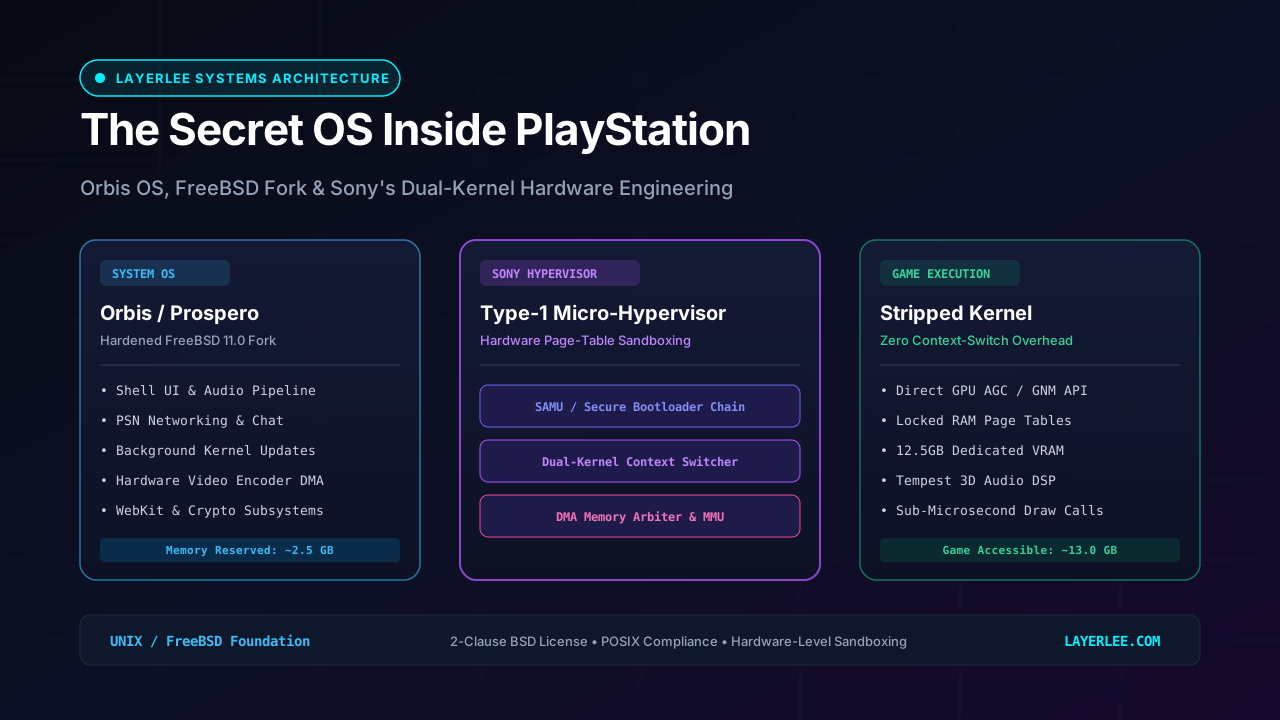
When you press the power button on your PlayStation 5, you expect a game console. What you actually boot is a hardened, custom fork of FreeBSD — a Unix-like operating system built for servers and workstations. Sony didn't pick FreeBSD for nostalgia. They picked it because it offers zero-overhead control, a battle-tested network stack, and a permissive license that lets them modify it without open-sourcing their secret sauce.
The system is called Orbis OS on the PS4 and Prospero OS on the PS5. Most PlayStation owners will never know it exists.
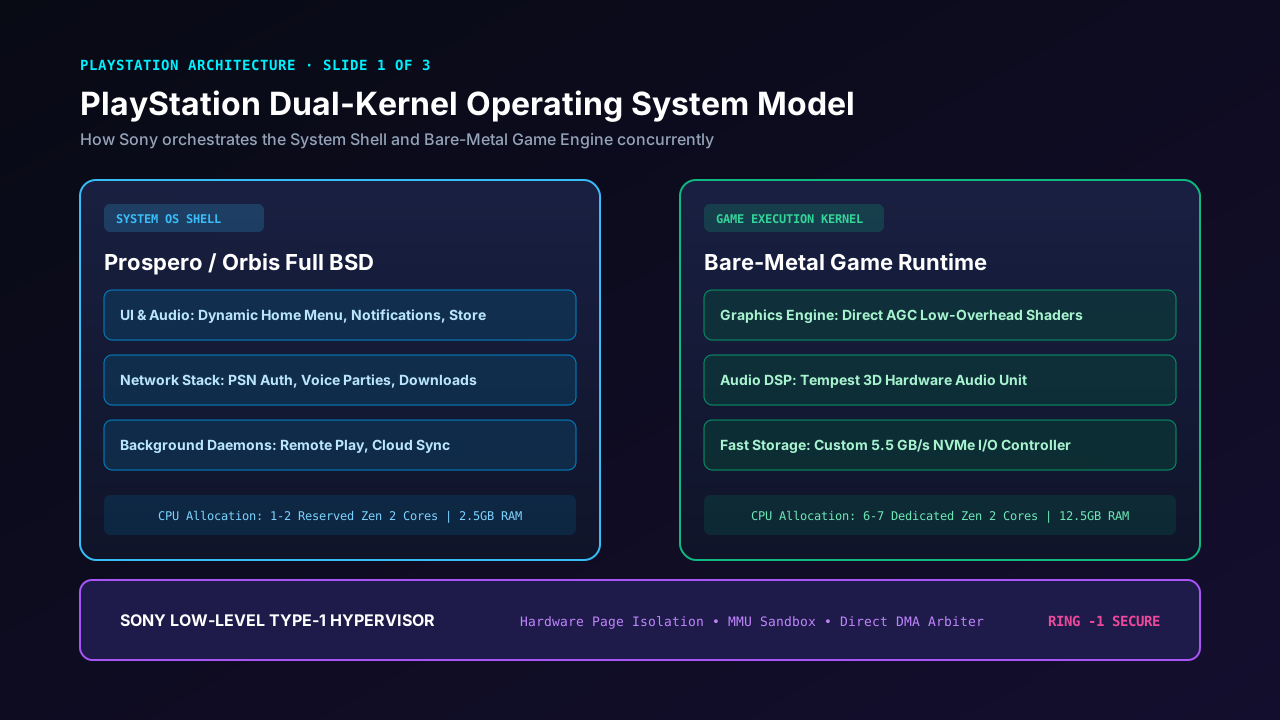
System architecture: System Shell OS and Bare-Metal Game Runtime working in tandem on Type-1 Hypervisor
Why FreeBSD? The Architecture Decision That Changed Gaming
Sony could have built a Linux-based system (like Nintendo Switch) or a Windows variant (like Xbox). They chose neither. Here's why FreeBSD won:
1. The BSD License
FreeBSD uses the 2-clause BSD license — one of the most permissive in the open-source world. Sony can:
- Modify the kernel without revealing changes
- Distribute binaries without sharing source
- Build proprietary drivers on top of open foundations
Linux's GPL would have forced Sony to open-source any kernel modifications — a catastrophic trade secret leak.
2. Battle-Tested Networking
FreeBSD's network stack is legendary. It powers Netflix's streaming infrastructure, WhatsApp's servers, and Apple's macOS/iOS (which also trace back to BSD). For a console that handles PSN authentication, multiplayer sessions, party chat, and game downloads simultaneously, networking reliability is non-negotiable.
3. POSIX Compliance
FreeBSD is fully POSIX-compliant. This means game engines like Unreal, Unity, and proprietary Sony engines can target standard POSIX APIs — the same interfaces developers use on Linux and macOS. Porting games becomes dramatically easier.
The POSIX Standard
POSIX (Portable Operating System Interface) is an IEEE standard that defines how Unix-like systems expose their APIs. Programs written to POSIX standards can run on any conforming OS with minimal changes.
The Dual-Kernel Architecture: Sony's Masterstroke
Here's where it gets genuinely fascinating. The PS4 and PS5 don't run one operating system — they run two simultaneously.
The System OS (Full Orbis/Prospero)
The first "OS world" handles everything the user sees:
- The PlayStation menu system (the shell UI)
- Background downloads and system updates
- Party chat and voice processing
- Trophy syncing and PSN connectivity
- Screenshots and video capture
- Remote Play streaming
This is a full FreeBSD environment with a custom GUI built on top. It's the OS you interact with.
The Game Kernel (Stripped FreeBSD)
When you launch a game, a second, stripped-down kernel takes control of the hardware. This "game mode" kernel:
- Kills all non-essential processes to free CPU and RAM
- Locks memory pages to prevent fragmentation
- Disables interrupts that aren't game-related
- Grants direct GPU access to the game engine
- Keeps a tiny shim layer to the system OS for background tasks
The result? Games run with near bare-metal performance — as if the operating system barely exists.
Developer Insight
Game developers target the stripped kernel environment. They write code knowing they have predictable, exclusive access to the APU. This is fundamentally different from PC gaming where the OS can interrupt at any moment.
Memory Layout: How the PS5 Splits 16GB
The PS5 has 16GB of unified GDDR6 memory shared between the CPU and GPU. The OS carefully partitions this:
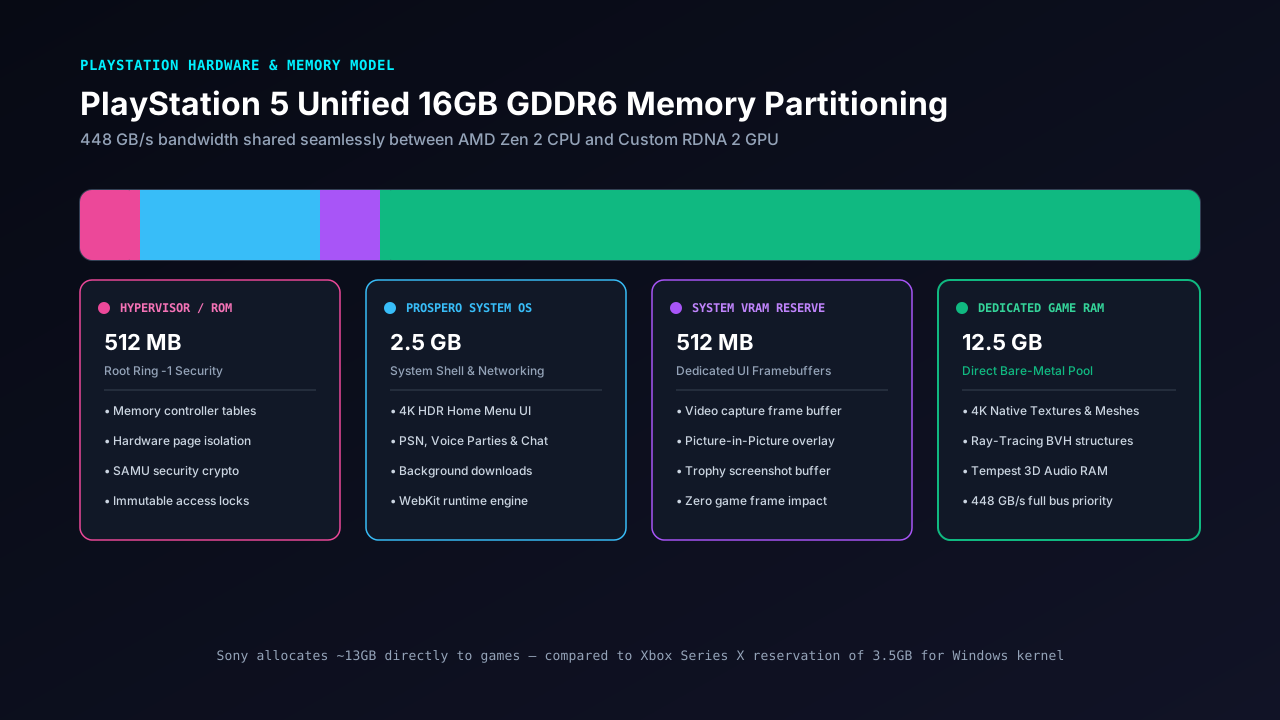
Sony is remarkably generous here. The Xbox Series X reserves about 3.5GB for its system, leaving ~9.5GB for games. PlayStation's leaner OS design lets games access nearly 13GB — a significant competitive advantage.
The Security Architecture: How Sony Locks Down FreeBSD
Out-of-the-box FreeBSD is an open system. Sony turns it into a fortress:
Hypervisor-Based Isolation
A thin hypervisor (similar to a type-1 hypervisor like VMware ESXi) sits below both OS worlds. It:
- Mediates all hardware access
- Prevents the game kernel from touching the system OS memory
- Implements hardware-backed sandboxing at the page table level
Signed Code Execution
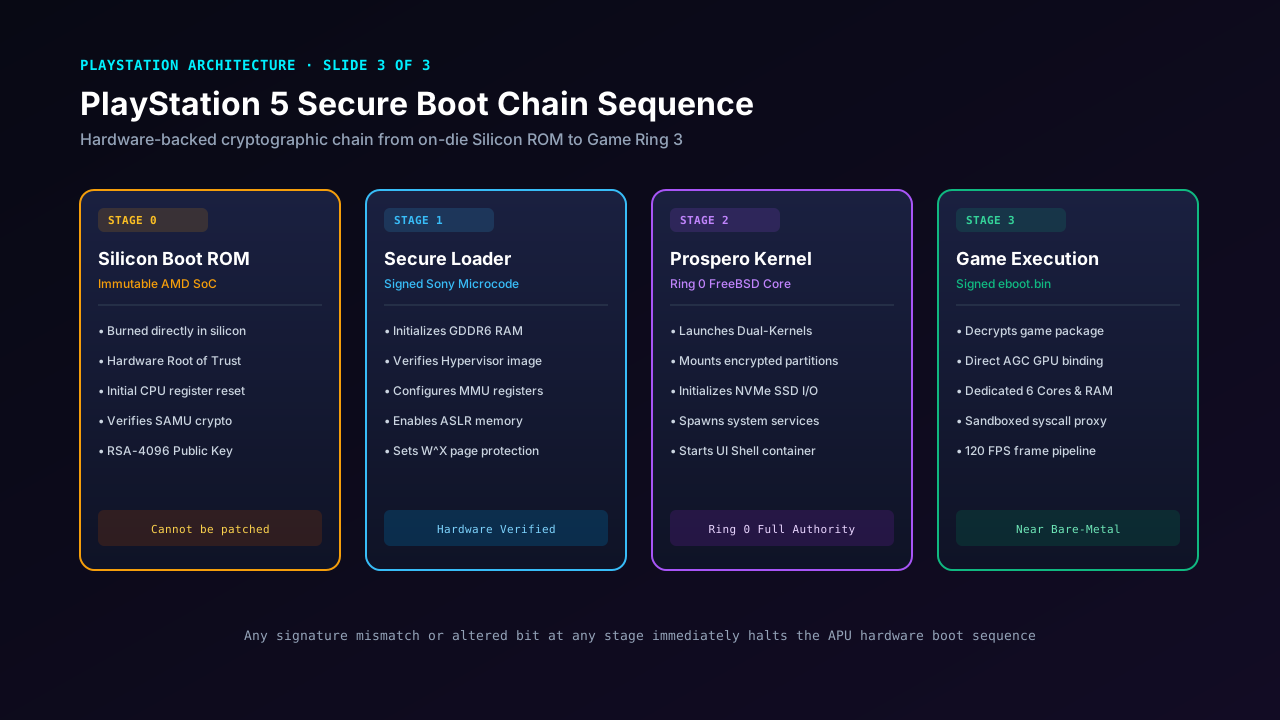
Every binary that runs on PlayStation must be cryptographically signed by Sony. The console has a hardware secure boot chain:
- ROM bootloader (immutable, burned into silicon)
- Sony-signed Stage 1 bootloader
- Sony-signed Prospero kernel
- Sony-signed game executable
If any step fails signature verification, boot halts. This is why console hacking is extraordinarily difficult — you'd need Sony's private keys.
ASLR and W^X
PlayStation's OS implements:
- ASLR (Address Space Layout Randomization) — randomizes where code loads in memory
- W^X (Write XOR Execute) — memory pages are either writable OR executable, never both
These are standard Linux/BSD security primitives, but Sony's implementation is hardware-enforced through the Memory Controller, making software bypasses nearly impossible.
The GPU Driver: A Custom Vulkan-Adjacent Stack
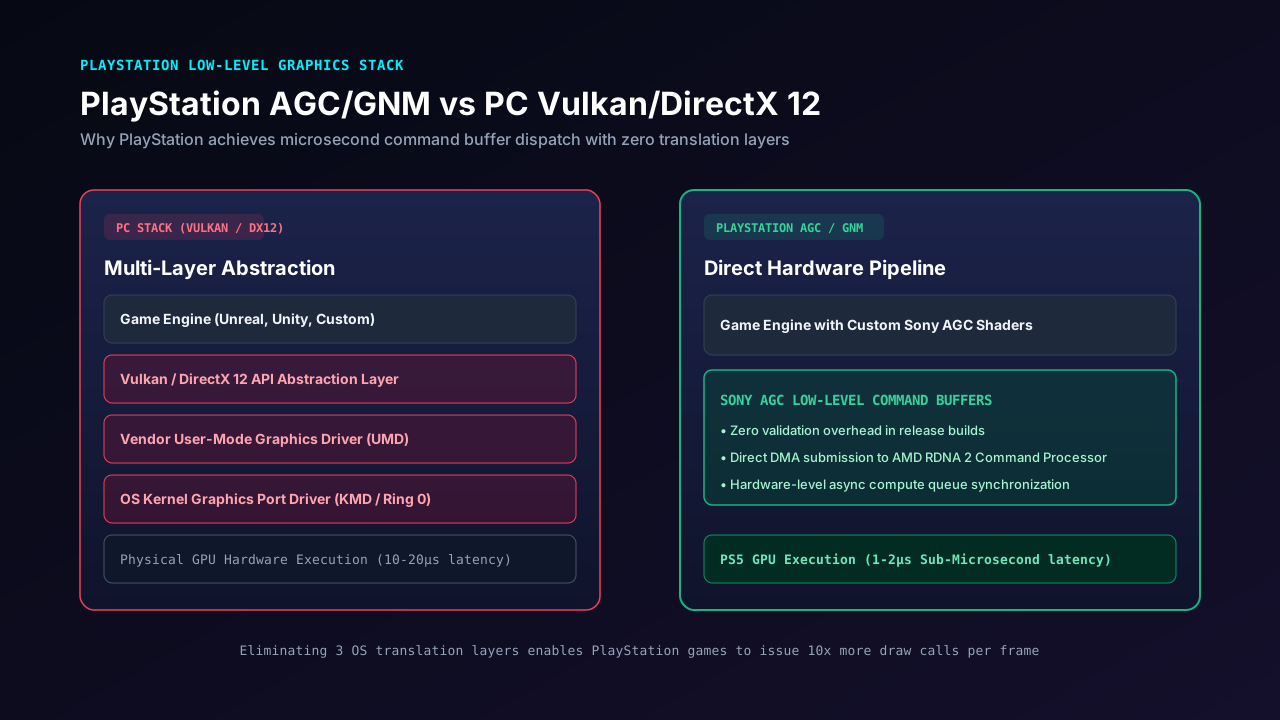
The PlayStation 5's GPU is an AMD RDNA 2 derivative. On PC, you'd use AMD's generic Vulkan/OpenGL drivers. On PS5, Sony wrote their own:
// GNM (PlayStation's proprietary graphics API) — conceptual structure
struct GnmDrawCommandBuffer {
  uint32_t* m_buffer;      // Command buffer DMA'd directly to GPU
  uint32_t  m_numDwords;   // No abstraction layer — raw GPU commands
  uint32_t  m_wrapCount;
};

// vs. Vulkan's abstracted approach
VkCommandBufferBeginInfo beginInfo = {
  .sType = VK_STRUCTURE_TYPE_COMMAND_BUFFER_BEGIN_INFO,
  .flags = VK_COMMAND_BUFFER_USAGE_ONE_TIME_SUBMIT_BIT,
};
vkBeginCommandBuffer(commandBuffer, &beginInfo);
PlayStation's GNM/GNMX API goes beneath Vulkan's abstraction layer, talking to the GPU almost directly. The PS5 version uses AGC (Advanced Graphics Core API) which has even thinner overhead.
The result: GPU command submission on PlayStation has microsecond-level latency compared to Vulkan's milliseconds.
Background Updates: Engineering Zero Interruption
One of PlayStation's most impressive engineering feats is downloading and installing system updates while you play. This requires:
Delta Patching
PlayStation doesn't download entire game updates. It downloads binary deltas — only the bytes that changed between versions. A 50GB game update might only require downloading 200MB of actual changed data.
Copy-on-Write File System
The PlayStation file system uses COW (Copy-on-Write) semantics. When an update installs:
- New files are written to a shadow partition
- Game continues reading from the original partition
- On next launch, the system atomically swaps partitions
The game never sees a half-installed update. It either runs the old version or the new version — never a corrupted in-between state.
Engineering Excellence
This COW + atomic swap pattern is the same technique used by ChromeOS, Android A/B updates, and Nix/NixOS. PlayStation engineers implemented it years before it became mainstream on mobile and desktop.
The PS5 SSD: An OS-Level Revolution
The PS5's custom SSD controller isn't just fast storage — it's integrated into the OS at a fundamental level.
The Kraken Decompressor
Sony built a hardware decompression unit called Kraken. Games store assets compressed using Oodle Kraken compression. When loading:
- SSD controller reads compressed data (5.5GB/s raw)
- Kraken hardware decompresses in real-time (~22GB/s effective)
- Data DMA's directly into game memory — CPU never touches it
The CPU is completely bypassed during asset loading. This is why PS5 load times are measured in under 2 seconds for games designed for it.
Logical IO Channels
The OS exposes multiple parallel IO channels to game code. A single game can simultaneously stream:
- Texture data for the next room
- Audio assets for the current scene
- Script data for AI systems
- Geometry for streaming world chunks
Each channel has its own priority, QoS settings, and dedicated DMA path. It's essentially a multi-lane hardware IO bus managed by the OS.
What Hackers Discovered (And What It Tells Us)
The PlayStation hacking community has inadvertently documented Sony's OS internals:
- 2015: Kernel exploits confirmed PS4 runs FreeBSD 9.0 base
- 2018: Memory dumps revealed the dual-kernel architecture
- 2021: PS5 partial jailbreak revealed Prospero OS uses FreeBSD 11.4 base
- 2022: Hypervisor research confirmed hardware-enforced memory isolation
Each discovery confirms Sony's engineering sophistication. The jailbreaks that exist work by exploiting WebKit (the web browser) — not the kernel directly — because the kernel is genuinely impenetrable through software alone.
The Bigger Picture: Why This Matters for Engineers
The PlayStation OS is a masterclass in constrained systems engineering:
- Trade-offs are explicit: Less OS overhead = more game performance. Every MB of RAM the OS uses is 1MB games don't get.
- Security through hardware: Don't fight security in software. Bake it into the hardware's memory controller and boot ROM.
- APIs matter enormously: GNM/GNMX's thin abstraction enables GPU performance impossible on PC Vulkan.
- The BSD license is a strategic weapon: The GPL would have forced Sony's hand. BSD let them build in secret.
If you're building high-performance embedded systems — game consoles, automotive systems, medical devices — the PlayStation architecture offers a roadmap: start with a proven open-source kernel, strip it ruthlessly, harden it with hardware, and expose only the APIs your use case needs.
"The best operating system is the one nobody notices." — Sony's design philosophy in practice.
Summary: The Hidden Layers of Your PlayStation
| Layer | Technology | Purpose |
|---|---|---|
| User Interface | Custom GUI on FreeBSD | Menu, PSN, Settings |
| System OS | Orbis/Prospero OS (FreeBSD fork) | Background services |
| Game Environment | Stripped FreeBSD kernel | Maximum game performance |
| Hypervisor | Sony custom (Type-1 style) | Security isolation |
| Security | Signed binaries + hardware ASLR | Anti-piracy, anti-hack |
| Storage IO | Custom SSD controller + Kraken | Instant loading |
| Graphics API | GNM/GNMX/AGC | Near-bare-metal GPU access |
The next time your PlayStation boots in under 30 seconds, loads a game in 2 seconds, and downloads an update while you play — remember you're watching a decade of systems engineering quietly working in the background.
Want to Go Deeper?
The PS5 SDK documentation leaked in various hacker forums reveals even more about the memory model and IO architecture. Mark Cerny's GDC 2020 talk "The Road to PS5" is the closest official explanation of the hardware design philosophy — highly recommended viewing for any systems engineer.

Written by Bipin Baral
Full-stack software engineer writing empirical, people-first technical breakdowns on operating systems, distributed systems, and backend architecture.
Frequently Asked Questions
Deep-dive answers and explanations about The Secret OS Inside PlayStation: How Sony Hides a Full Operating System in Your Console