The Centralized Database Bottleneck in an Edge World
Modern frontend applications are deployed to the global edge via Vercel, Cloudflare, or AWS CloudFront. Your JavaScript and HTML render in Frankfurt, Singapore, and New York in under 10 milliseconds.
However, the moment your page requires dynamic database queries, the edge server must open a TCP connection to a centralized database cluster in us-east-1 (Virginia).
  User in Singapore ──(5ms)──► Edge Function (Singapore)
                                     │
                                     │ (180ms Round-Trip Latency!)
                                     ▼
                             PostgreSQL in Virginia (us-east-1)
The 180ms speed-of-light physical barrier across undersea fiber optic cables negates every frontend optimization you have ever made.
The industry tried fixing this with read replicas, but traditional relational databases were never architected for micro-tenant multi-region scaling. They are heavy, resource-intensive daemons that consume hundreds of megabytes of RAM per instance and require complex connection pooling mechanisms (like PgBouncer).
This is why SQLite is staging one of the most remarkable comebacks in software engineering history.
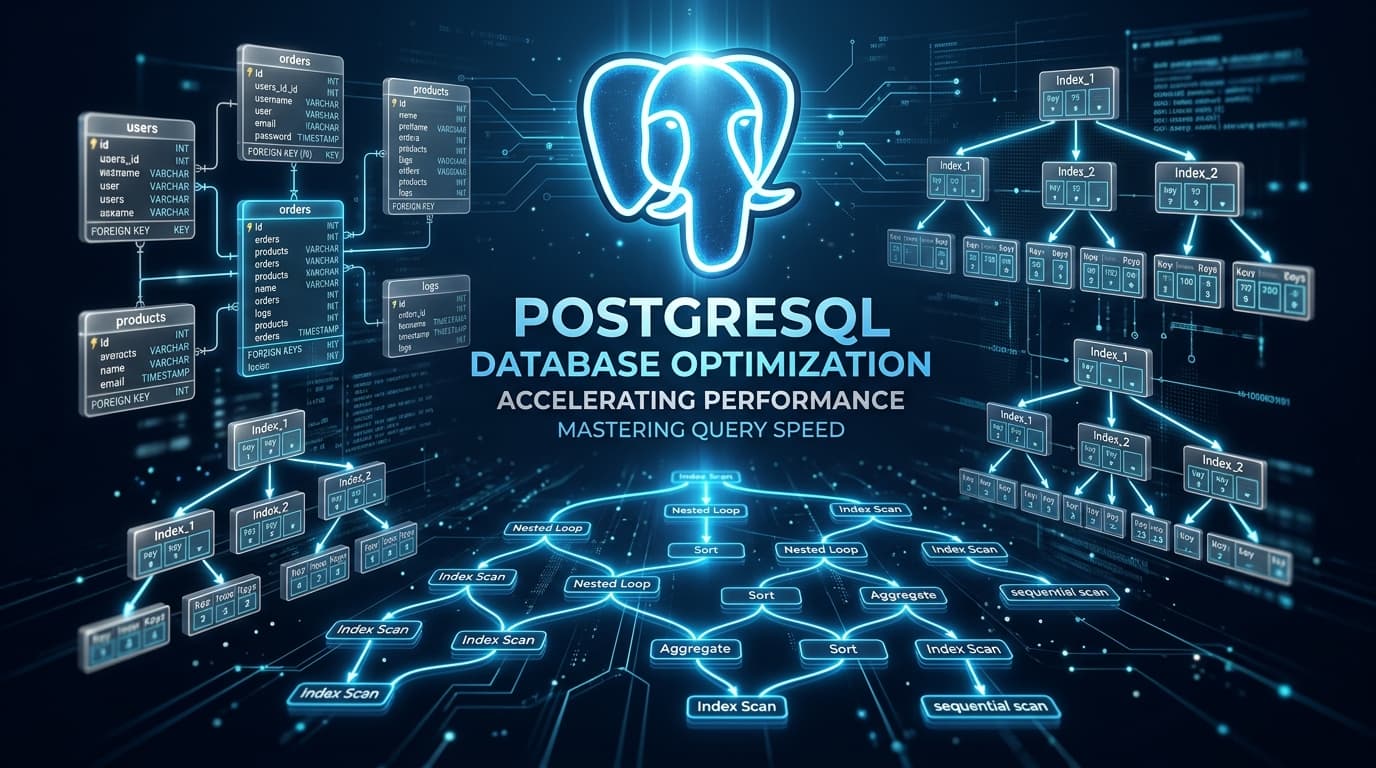
Global latency comparison: centralized DB (180ms) vs replicated SQLite edge database (<5ms)
1. Inside SQLite: The World's Most Deployed Database Engine
SQLite is not a client-server database. It is an in-process library written in ANSI C. When your code issues a query, there are:
- Zero network sockets
- Zero IPC (Inter-Process Communication) overhead
- Zero serialization/deserialization penalties
The database engine runs in the exact same memory address space as your application. A typical read query takes 10 to 50 microseconds (0.00005 seconds).
The B-Tree & Page Cache Storage Model
SQLite stores an entire relational database in a single file on disk. This file is partitioned into fixed-size pages (typically 4096 bytes):
┌───────────────────────────────────────────────────────────┐
│                       SQLITE DATABASE FILE                │
├─────────────┬─────────────┬─────────────┬─────────────────┤
│ Page 1:     │ Page 2:     │ Page 3:     │ Page N:         │
│ Header &    │ B-Tree Root │ B-Tree Leaf │ Overflow Data   │
│ Schema      │ Table A     │ Table A     │ Blobs/Strings   │
└─────────────┴─────────────┴─────────────┴─────────────────┘
When executing a query, SQLite's B-Tree engine searches the page tree in RAM, reading directly from the OS page cache via mmap().
2. The Secret Weapon: Write-Ahead Logging (WAL)
Prior to SQLite 3.7, writes acquired an exclusive lock on the entire database file, blocking all concurrent readers.
The introduction of WAL (Write-Ahead Logging) mode fundamentally transformed SQLite's concurrency model:
- Readers never block writers.
- Writers never block readers.
- Changes are sequentially appended to a companion
.walfile on disk.

How WAL Operates:
   [Main DB File: db.sqlite]  ◄── Readers read stable snapshots
             ▲
             │ (Periodic Checkpoint)
   [Log File: db.sqlite-wal] ◄── Writers append atomic 4KB frames
When a transaction commits, SQLite writes a 32-byte header followed by the modified 4KB page into the WAL file. Readers use a shared-memory index (.shm) to locate the most up-to-date version of each page without ever touching a lock.
3. Distributed LibSQL: Turning SQLite into a Distributed Engine
While SQLite is ultra-fast locally, how do you replicate it across 30 edge regions worldwide?
This was solved by LibSQL (the open-source fork of SQLite maintained by Turso) through two core innovations:
A. Virtual File System (VFS) Interception
SQLite delegates all disk I/O operations to an abstract interface called the VFS (Virtual File System). LibSQL implements a custom VFS that intercepts calls to xWrite, xRead, and xSync.
Instead of writing exclusively to local disk, the LibSQL VFS streams WAL frames directly over an encrypted WebSocket or gRPC connection to a primary node.
B. Frame-Level Physical Replication
Traditional database replication uses Logical Replication (re-executing SQL statements or parsing row-level WAL records).
LibSQL uses Physical Page-Level Replication:
// Conceptual LibSQL frame replication payload
struct WalFramePayload {
    page_number: u32,
    frame_index: u64,
    data: [u8; 4096],     // Exact 4KB binary disk page
    checksum: u64,
}
Because replication operates on raw 4KB memory pages rather than parsed SQL, replication lag between primary and edge replicas is under 5 milliseconds.
4. Multi-Tenancy Architecture: Millions of Databases per Server
In PostgreSQL or MySQL, creating 100,000 separate databases on a single server is impossible due to connection limits, shared buffers, and catalog lock contention.
With SQLite/LibSQL:
- Each database is a file consuming a few kilobytes on disk.
- When idle, a database consumes 0% CPU and 0 MB of RAM.
- A single physical server with NVMe storage can host over 1,000,000 active isolated databases.
┌───────────────────────────────────────────────────────────┐
│              MULTI-TENANT EDGE NODE (Turso/LibSQL)        │
├───────────────────────────────────────────────────────────┤
│  Tenant 1: tenant_acme.db       (In RAM: 1.2 MB)          │
│  Tenant 2: tenant_stripe.db     (Idle on Disk: 140 KB)    │
│  Tenant 3: tenant_uber.db       (In RAM: 4.8 MB)          │
│  Tenant 100,000: tenant_xyz.db  (Idle on Disk: 64 KB)     │
└───────────────────────────────────────────────────────────┘
This enables Database-per-Tenant architecture — every customer in a SaaS application gets their own physically isolated database. There is zero risk of cross-tenant data leaks, backups can be restored individually, and compliance (GDPR/HIPAA) is strictly enforced.
Embedded Replicas in TypeScript
With LibSQL and Turso, you can run an embedded replica right inside your Node.js or Next.js server. Reads execute against local disk in 50 microseconds, while writes automatically proxy to the global primary node.
import { createClient } from "@libsql/client";

// Connect with Embedded Replica (Local file + Remote Primary Sync)
const db = createClient({
  url: "file:local-replica.db",
  syncUrl: "libsql://primary-db.turso.io",
  authToken: process.env.TURSO_AUTH_TOKEN,
  syncInterval: 60, // Auto-sync every 60 seconds
});

// Sync latest WAL frames from primary
await db.sync();

// Blazing fast local read (<0.1ms latency)
const users = await db.execute({
  sql: "SELECT id, name, email FROM users WHERE organization_id = ?",
  args: ["org_4812"],
});

console.log(`Fetched ${users.rows.length} users in microseconds!`);
5. Architectural Comparison Matrix
| Feature | PostgreSQL / MySQL | Redis | Distributed SQLite / LibSQL |
|---|---|---|---|
| Query Latency | 5ms – 200ms (network-bound) | 1ms – 5ms (RAM-bound) | 0.05ms – 2ms (in-process/local disk) |
| Data Durability | Full ACID Disk | In-memory + AOF snapshot | Full ACID WAL |
| Relational Queries | Full SQL (Joins, Indexes) | Key-Value / Limited Data Structures | Full ANSI SQL + Vector Search |
| Tenant Isolation | Shared DB / Row-level Security | Shared Key Namespaces | Physical Database-per-Tenant file |
| Idle Memory Overhead | 20MB – 100MB per instance | Varies by dataset | 0 MB (Zero when idle) |
The Verdict: The Renaissance of Edge-Native Data
The future of web infrastructure is not giant monolithic database clusters hidden behind layers of redis caches and connection poolers.
The future belongs to lightweight, replicated, embeddable database engines that live right next to the compute layer. By combining SQLite's decades of rock-solid file-format stability with modern WebSocket WAL replication, distributed SQLite delivers the holy grail of software engineering: sub-millisecond queries, total tenant isolation, and zero operational overhead.
"SQLite isn't competing with PostgreSQL; it's competing with fopen(). Now, with LibSQL, it's competing with the entire cloud."
Key Architecture Takeaway
For read-heavy workloads and multi-tenant SaaS applications, consider migrating to an embedded replica architecture. Eliminating the database network hop often improves Time to First Byte (TTFB) more than any CDN or frontend caching layer ever could.

Written by Bipin Baral
Full-stack software engineer writing empirical, people-first technical breakdowns on operating systems, distributed systems, and backend architecture.
Frequently Asked Questions
Deep-dive answers and explanations about Why SQLite is the Future of Distributed Databases: Turso, LibSQL & WAL Replication